
Bio/Archaeological Techniques and Research Center
BIOARCH CANADA
G.R.A.P.E
The Gadachrili Gora Regional
Archaeology Project Expedition
Kvemo Kartli, Georgia
May 24 to June 19, 2027
June 21 to July 17, 2027

GRAPE's Story
The Gadachrili Gora Regional Archaeology Project Expedition (GRAPE) is a Georgian-Canadian cooperative effort investigating the prehistory of the Caucasus Region, in the Republic of Georgia. GRAPE began its inaugural season in 2016 with renewed excavations at Neolithic sites in the Kvemo Kartli Region. The project is also part of the larger: “Research and Popularization of Georgian Grape and Wine Culture” effort. During its initial seasons GRAPE recovered evidence for the earliest known wine, dating to 6,000 – 5800 BCE. The evidence for wine was found in residues on Shulaveri Shomu type pottery recovered from Shulaveris Gora. Our ongoing excavations at Gadachrili, Shulavaeri and Imiris Gora continue to expand our knowledge of the Neolithization process in the southern Caucasus.
Our survey efforts, through GGRAS have explored the history of occupation on the Marneuli Plain of Southern Georgia. It is the largest plain in this mountainous Caucasus region. Its intricate river network, the Kura and its tributaries, position the region as a junction for movement and communication between the open plains of Azerbaijan and the towering Caucasus. Building on the results of the GGRAS surveys we are expanding our focus to previously uninvestigated Neolithic, Chalcolithic, and Early Bronze Period sites (roughly 6000-3000 BC).
Ongoing laboratory research is conducted on materials recovered by GRAPE, with the permission of the Georgian National Museum. Research is ongoing at the Georgian National Museum, the University of Toronto, and the University of Pennsylvania Museum. Analyses include: Pottery Analysis, Lithic Analysis, Micro Refuse Analysis, Soil Micro-morphology analysis, Paleobotanical Analysis and Residue Analysis.
As part of our fieldwork we conduct ongoing experimental archaeology.
We engage in: pottery making, kiln building, obsidian and clay sourcing, knapping, butchery, and awl-fashioning. These activities assist us in interpreting the past communities that we study.
Location: Marneuli, Kvemo Kartli, Republic of Georgia
Dates: May 23 - July 18, 2027
· Session 1: May 23 - June 16, 2027
· Session 2: June 18 - July 16, 2027
Housing: a hotel, about 20km from the site, 2-3 participants per room, private bathrooms available in each room. Transportation provided to and from the site and lab.
Meals: breakfast and diner are served Mon-Fri; traditional country cuisine; we can accommodate vegetarian diets. However, we are not able to offer a vegan or gluten-free option.
Cost: US$ 2845 per 4 -week session (4 weeks mandatory)
Fee includes: registration and field fees, lectures, field and laboratory gear, housing and meals as described above

Our survey efforts, through GGRAS have explored the history of occupation on the Marneuli Plain of Southern Georgia. It is the largest plain in this mountainous Caucasus region. Its intricate river network, the Kura and its tributaries, position the region as a junction for movement and communication between the open plains of Azerbaijan and the towering Caucasus. Building on the results of the GGRAS surveys we are expanding our focus to previously uninvestigated Neolithic, Chalcolithic, and Early Bronze Period sites (roughly 6000-3000 BC).
Ongoing laboratory research is conducted on materials recovered by GRAPE, with the permission of the Georgian National Museum. Research is ongoing at the Georgian National Museum, the University of Toronto, and the University of Pennsylvania Museum. Analyses include: Pottery Analysis, Lithic Analysis, Micro Refuse Analysis, Soil Micro-morphology analysis, Paleobotanical Analysis and Residue Analysis.
As part of our fieldwork we conduct ongoing experimental archaeology.
We engage in: pottery making, kiln building, obsidian and clay sourcing, knapping, butchery, and awl-fashioning. These activities assist us in interpreting the past communities that we study.


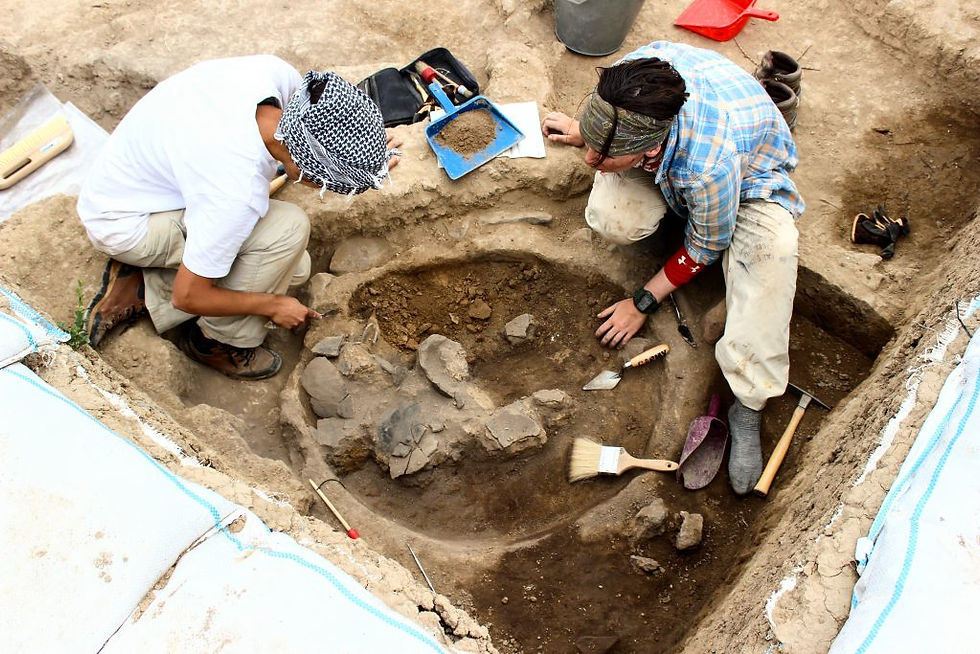


Project participants, students and volunteers, are integrated into the GRAPE research team. Everyone is welcome to participate in project workshops, lectures, activities and trips. All participants must adhere to the GRAPE code of conduct while on the project. GRAPE is an inclusive research project. We, as a community, hold each other accountable to a high standard of scientific and professional conduct.
To achieve a more encompassing archaeological field experience, we encourage all our participants to consider our Roman or Medieval Cemetery Funerary Excavation in Romania as well, for a total of 8 weeks in the field.
 |  |  |  |
|---|---|---|---|
 |  |  |  |
 |  |  |  |
 |  |  |  |
 |  |  |  |


