
Bio/Archaeological Techniques and Research Center
BIOARCH CANADA

About the Course
Location: Székelyudvarhely, Hatghita County, Transylvania, Romania
Dates:
Session 1 : July 6- July 30, 2027
Housing: housed in a beautifully renovated hotel, 2-3 participants per room, with private bathrooms
Meals: breakfast and dinner are served Mon-Fri at the hotel; traditional Romanian and Szekler cuisine; we can accommodate vegetarian diets, however, we are NOT able to offer a vegan or gluten-free option.
FIELD PROGRAM COST (non-credit):
Session 1: US$ 3395 (4 weeks)
Fees include: registration and field fees, lectures, field and laboratory gear, housing and meals as described above. Academic credits/tuition not included in the above cost.
Our Juvenile Osteology Research Workshop is a more advanced continuation of the Adult Osteology Workshop. The aim of this workshop is to provide participants with an intensive review of juvenile osteology and an overview of the ways in which this kind of unique information is interpreted by bioarchaeologists. During the workshop, participants will have the chance to study the growth and development of the human skeleton across various juvenile age cohorts, ranging from pre-natal to pre-adult. Most importantly, participants will have the opportunity to gain hands on experience with the analysis of exceptionally well preserved juvenile skeletal remains.

Students who wish to expand their skills and experience in the field can register for an additional 4 week session of the Medieval Cemetery Funerary Excavation, or the Roman Villa Excavations immediately preceding the Juvenile Osteology Workshop. Or students can participate in the Georgian Neolithic Excavations, with a two week break between the two projects (June 19-July 6) to travel between the wo countries and explore them further. Note that previous experience in human anatomy and osteology, such as our Adult Osteology Research Laboratory Workshop or equivalent, is recommended but not mandatory.
Medieval Crisis Populations - Victims of Change
The Székeler's Story from a different viewpoint
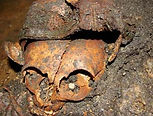
Recent contributions to bioarchaeological scholarship have devoted considerable treatment to the analysis
of children’s skeletons from both archaeological and contemporary (i.e., forensic) contexts.
During the workshop, participants will have the chance to study the growth and development of the human skeleton across various juvenile age cohorts. Most importantly, participants will have the opportunity to gain experience with the analysis of juvenile skeletal remains.
In addition to intensive hands-on laboratory instruction and research, participants will also contribute to
numerous seminar discussions and hear lectures on topics related to the bioarchaeology of children. Topical areas to be included involve the following: an overview of the bioarchaeology of children, growth and development, weaning an dietary stress, juvenile trauma and pathology, as well as reconstruction and interpretation of infant mortality. Moreover, seminars and lectures will introduce how novel technological applications (i.e., histology, CT imaging) have been utilized by bioarchaeologists who study juvenile remains.
The exceptionally well preserved skeletal remains that will be investigated during this workshop are
excavated from five archaeological sites located in the heart of Transylvania. The juvenile remains that we will study are housed at the Haaz Rezso Museum in Odorheiu Secuiesc, Harghita County.