
Bio/Archaeological Techniques and Research Center
BIOARCH CANADA

About the Course
Location: Valeni, Hatghita County, Transylvania, Romania
Dates:
Session 1 : June 8- July 3, 2026
Session 2 : July 5 - July 31, 2026
Housing: The Hinto Hotel, 2-3 participants per room, with private bathrooms
Meals: breakfast and dinner are served Mon-Fri at the hotel; traditional Romanian and Szekler cuisine; we can accommodate vegetarian diets, however, we are NOT able to offer a vegan or gluten-free option.
FIELD PROGRAM COST
(non-credit):
Session 1 : US$ 2945 (4 weeks)
Session 2: US$ 2945 (4 weeks)
Fees include: registration and field fees, lectures, field and laboratory gear, housing and meals as described above. Academic credits/tuition not included in the above cost.
Academic Credit (optional): 3 or 6 undergraduate (graduate - if applicable) credits can be earned through University of South Florida - additional USF tuition. See USF Program Brochure for more information. USF procedures and deadlines apply. Click the link below or contact Dr. Jonathan Bethard at USF for more details.
Living and Dying on the Edge of Europe Project
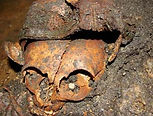
This project is the excavation of an abandoned medieval church in the Transylvanian village of Văleni (Hu: Patakfalva). We are exploring how centuries of religious and political upheaval have influenced
demographics and health of the individuals interred within the church walls and associated cemetery. This field school project is part of a broader investigation of the abandonment of medieval churches in the area and provides significant opportunities for students to get involved in international bioarchaeology, multi-institution networking and collaboration, and addressing biological, archaeological, and cultural questions.
Over the course of several weeks, students will acquire skills in broad and small scale excavation, drawing, mapping, and note taking; thereby, developing the strategic skill necessary to acquire jobs working for both archaeological and forensic organizations around the world. Evenings and rain days will be used to design and complete projects using excavated materials. Students will have the opportunity to present their research at the local symposium in Romania, as well as other major conferences if they so choose. The entities involved are interested in extensive research and publication, allowing for many directions of continued investigation and student involvement and research.
All excavation and analysis are conducted with support of- and in collaboration with- ArchaeoTek /BioArch Canada personnel, the Museul Haáz Rezső in Odorheiu Secuiesc, Romania, and the villagers of Patakfalva. The high impact practices achieved in this course are Diversity/Global Learning, Community-Based Learning, and Research Projects. These practices will enhance student learning by exposing students to human cultural and biological diversity, allowing students to engage with the local community through the science of bioarchaeology and public outreach, and allowing students to generate research. Lectures will be offered to our participants, ranging from local history and archaeology to material culture typologies and architecture, to various subjects related to mortuary archaeology. Students will be taught the proper use of various field tools. Explanations will be provided for every step of the excavation, on stratigraphy, field finds and archaeological complexes. We expect our participants to be intellectually involved in the archaeological process and thus interacting with the research staff.